
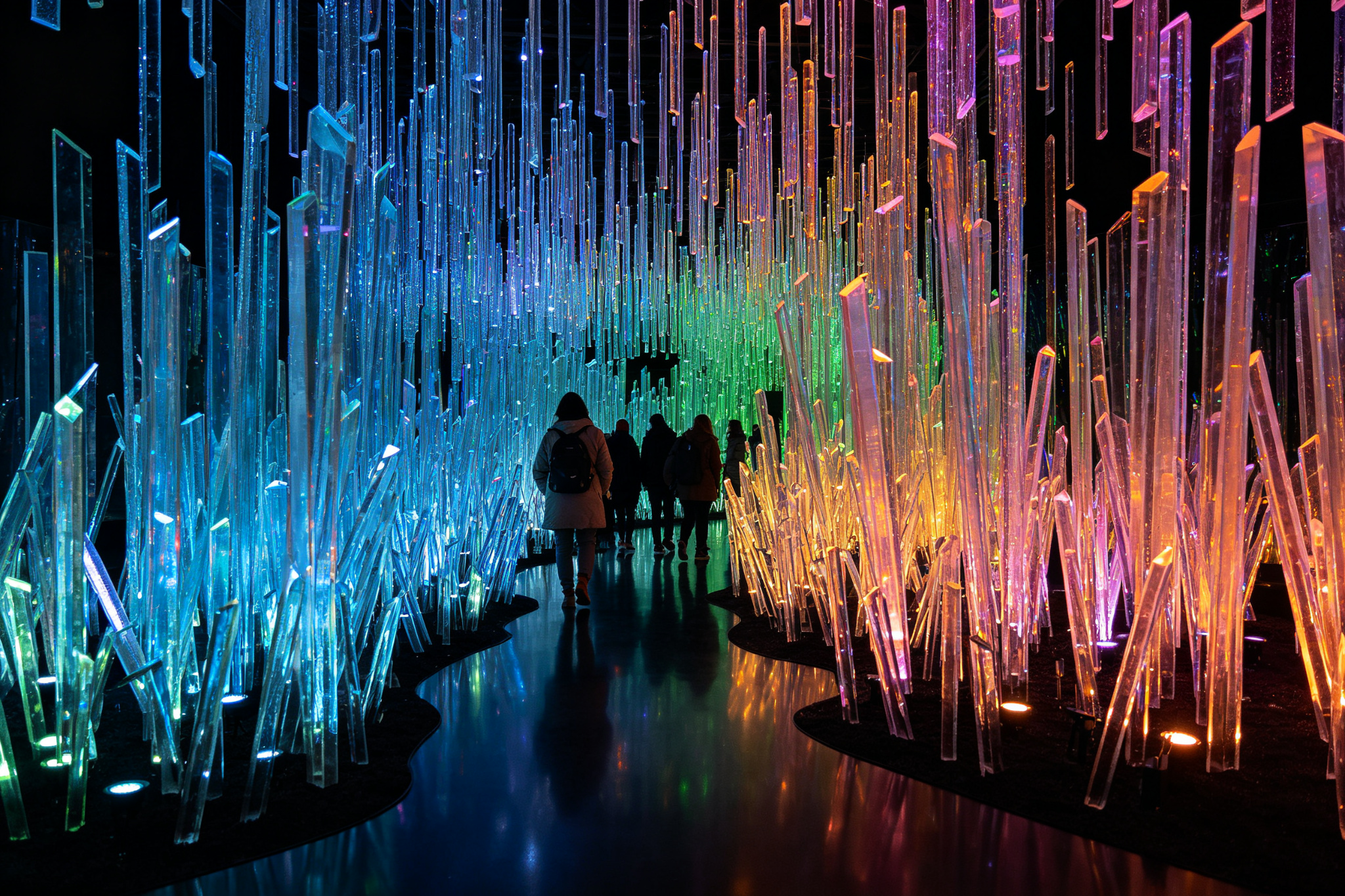
An immersive interactive LED crystal forest created for a prestigious contemporary art biennale, featuring 250 motion-responsive light pillars ranging from 2 to 6 meters in height. Visitors walking through the forest triggered cascades of color that rippled outward from their movements, creating a constantly evolving visual symphony. The installation explored the intersection of nature, technology, and human presence, inviting contemplation about how we shape and are shaped by our environments.
Creating a crystal forest for an international art biennale demanded the highest level of artistic and technical precision. The curatorial team required a concept that was both visually stunning and conceptually rigorous. The installation space was a former industrial hall with high ceilings but uneven floors and limited power capacity. Each light pillar had to be precisely calibrated to respond to individual visitors while maintaining a cohesive visual experience when multiple people moved through the space simultaneously.
The 250 light pillars were arranged in a naturalistic forest pattern, with winding pathways that encouraged exploration rather than direct passage. Each pillar contained a vertical strip of 144 addressable RGB LEDs, capped with a faceted crystal diffuser that refracted light into rainbow patterns. Motion sensors embedded in the forest floor detected visitor positions, triggering algorithms that sent waves of color through the surrounding pillars. The color palette shifted gradually throughout the day, from cool blues and whites in the morning to warm golds and purples in the evening, creating a living, breathing environment that responded to both human presence and the passage of time.
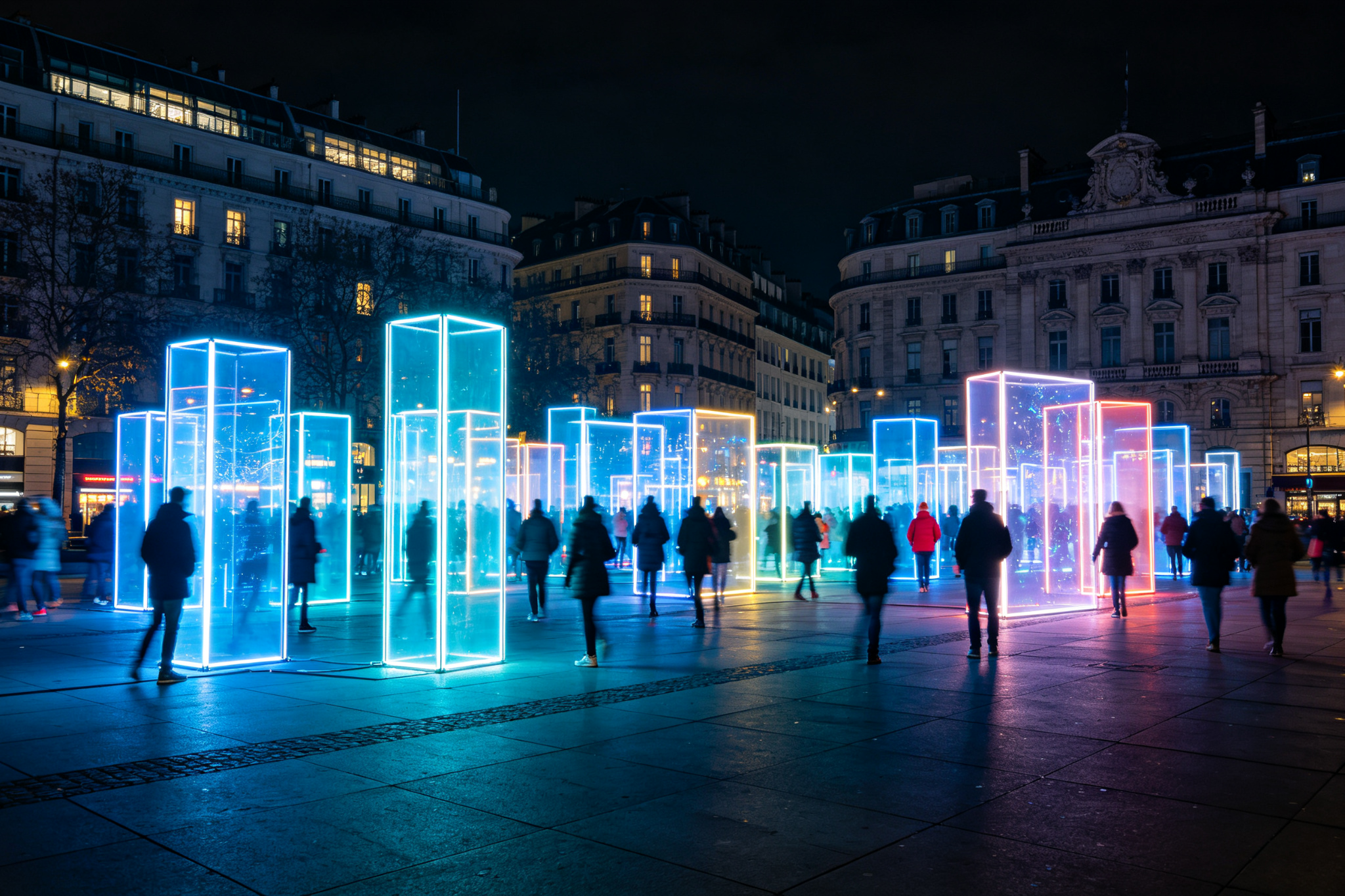
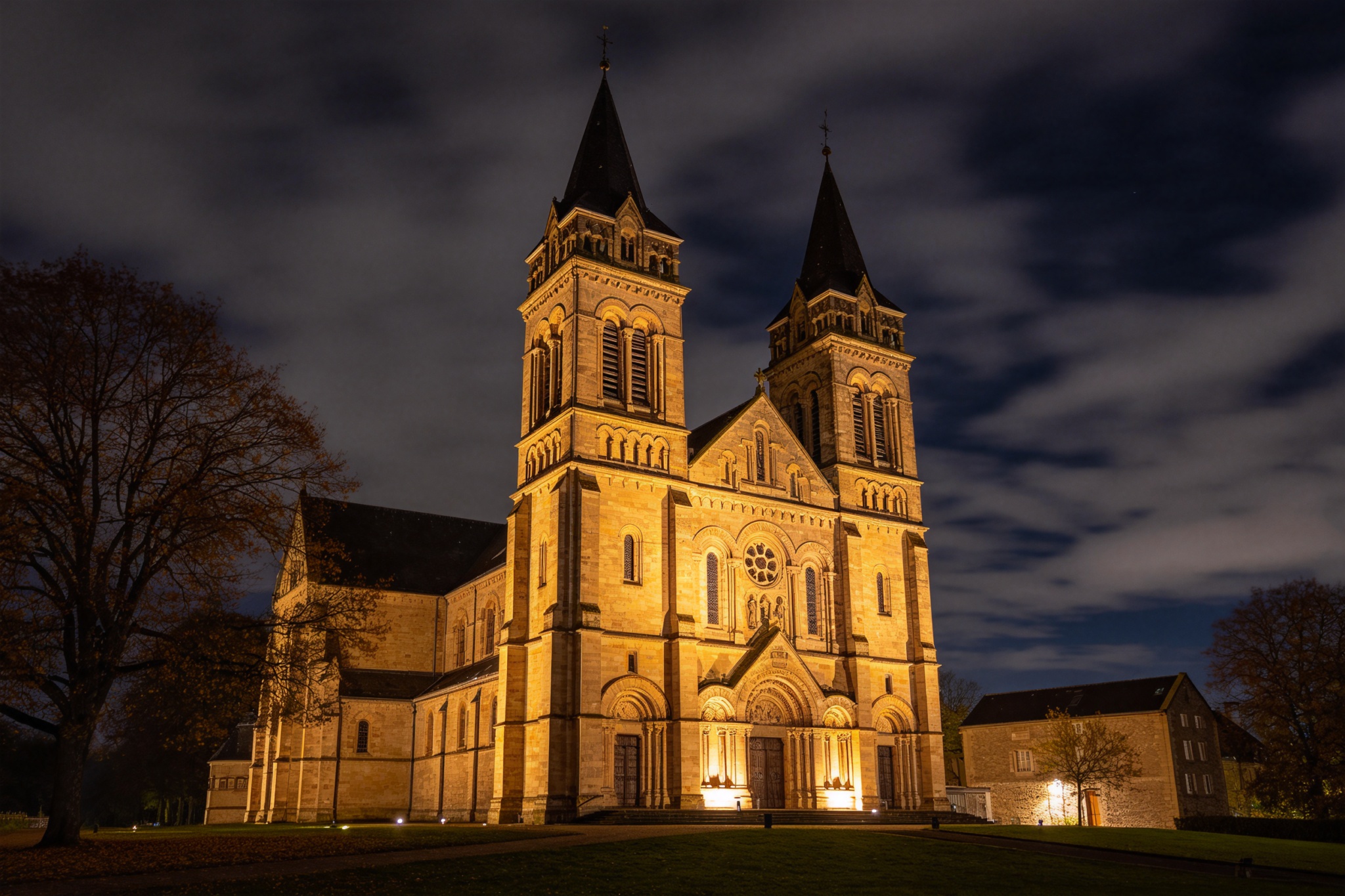
Each pillar was custom-fabricated using lightweight aluminum tubing and hand-polished acrylic crystal diffusers. The 250 pillars were manufactured at our facility over 8 weeks, with each unit individually tested for color consistency and response accuracy. On-site installation took 7 days, with our team carefully positioning each pillar according to a detailed site map. The control system used a combination of LIDAR sensors and infrared motion tracking, feeding into a custom software platform that managed all 36,000 LED pixels in real time. Power consumption was optimized to just 4.5 kW total, well within the venue capacity.
The crystal forest became the most photographed installation at the biennale, with over 80,000 visitors experiencing it during its three-month run. Art critics praised it as "a masterful exploration of light as living material" and "one of the most emotionally resonant works in the exhibition." Social media generated over 3 million impressions, with visitors sharing their personal journeys through the forest. The installation was subsequently acquired by a private art collection and has been displayed at two additional international venues. Our team received the biennale Technical Innovation Award for the responsive control system.
Let us bring your vision to life with authentic Zigong craftsmanship and world-class engineering.
Get a Free Quote