
Maximizing Revenue at Your Custom Lantern Festival

Zhang Lei
Zhang Lei
Senior Design Director
15+ years in lantern festival design, led 200+ international projects. Expert in cultural theme development and large-scale installation art.
Maximizing Revenue at Your Custom Lantern Festival

Beyond Ticket Sales

A profitable custom lantern festival generates revenue from multiple streams. While ticket sales are the foundation, the most successful festivals derive 40-60% of revenue from ancillary sources. This guide covers proven revenue strategies.

Ticket Pricing Strategy

Implement tiered pricing: General admission ($18-$25), Peak/Weekend ($25-$32), VIP ($40-$60 with fast entry and viewing areas), and Season Passes ($60-$100 for unlimited visits). Early-bird discounts (20-30% off) drive early cash flow and create buzz. Group discounts for 10+ attendees capture school and corporate groups.

Food & Beverage

F&B typically generates 20-30% of total revenue. Curate a diverse vendor lineup with both local favorites and festival-specific items. Themed food (dragon-shaped pretzels, lantern cupcakes) increases average spend. Consider a premium dining area with table service for higher margins.

Merchandise

Merchandise accounts for 10-15% of revenue. Bestsellers include: branded apparel, mini lanterns, light-up toys (for kids), themed souvenirs, and festival posters. Place merchandise stores at exit points where visitors are primed to purchase. Average per-capita merch spend is $8-$15.

Sponsorships

Sponsorships can offset 20-50% of production costs. Offer: presenting sponsor (naming rights), zone sponsors (branded themed areas), product sponsors (themed food/beverage), and media sponsors (in-kind promotion). Create tiered sponsorship packages with clear deliverables.

Premium Experiences

Add high-margin experiences: private guided tours, lantern-making workshops, photo packages with costumed characters, VIP viewing platforms, and special event nights (Date Night, Seniors Day, Kids Free Friday). These increase average revenue per visitor and create urgency.

Venue Partnerships

If hosting at a zoo, botanical garden, or museum, negotiate revenue sharing or reduced venue fees in exchange for increased visitation to the host attraction. Many venues report 30-50% increases in memberships following a lantern festival.

Data-Driven Optimization

Track per-capita spending by zone, time slot, and visitor segment. Use this data to optimize vendor placement, merchandise assortment, and staffing. The best festivals continuously refine their revenue model based on real-time data.

At Zigong Sun Culture, we provide revenue consulting as part of our turnkey custom lantern festival service. Contact us to maximize your event's profitability.
Explore our related services: Custom Lantern Festival and World Festive Lanterns. Contact us for a free custom quote.

Have Questions About Custom Lantern Festival?

Our team of lantern festival experts is ready to help. Contact us for a free consultation tailored to your project.

Email Us Now Call +86 13309004354

Budgeting and Timeline Planning for Custom Lantern Projects

Realistic budgeting is essential for the success of any custom lantern project. Costs vary significantly based on size, complexity, quantity, and shipping destination. As a general guideline, small decorative lanterns (1-3 meters) range from $500 to $5,000 each, medium display pieces (3-8 meters) from $5,000 to $25,000, and large-scale centerpieces (8+ meters) from $25,000 to $150,000+. A complete custom lantern festival with 30-50 pieces typically requires an investment of $150,000 to $800,000, including design, manufacturing, shipping, and installation. These figures are estimates — we provide detailed, itemized quotations after understanding your specific requirements.

Timeline planning should begin 4-6 months before your desired opening date for medium-scale projects, and 6-9 months for large international festivals. The design phase (consultation through final approval) typically requires 3-6 weeks. Production takes 30-60 days depending on complexity and quantity. Ocean shipping adds 4-8 weeks, and installation requires 1-4 weeks on site. Building buffer time into your schedule is essential — we recommend adding 2-3 weeks of contingency for unexpected delays such as port congestion, weather disruptions, or permit processing. Starting early also allows for more design iterations and better production scheduling, which often results in higher quality outcomes.

Cost optimization strategies can help maximize your budget without compromising quality. Reusing lantern frameworks from previous events (with new skins and lighting) can reduce costs by 30-40%. Standardizing certain design elements across multiple pieces reduces engineering time. Scheduling production during off-peak seasons (February through June) may offer better pricing and faster turnaround. And consolidating shipping with other projects or choosing flexible delivery dates can reduce freight costs. Our project managers work closely with clients to identify cost-saving opportunities while maintaining the visual impact and quality that make lantern festivals successful.

Custom Design Process: From Concept to Fabrication

A successful custom lantern festival begins with a thorough understanding of the client's vision, venue constraints, and audience expectations. Our design process typically begins with a creative brief that captures the event theme, cultural context, desired emotional impact, and budget parameters. From this foundation, our creative team develops 2-3 concept directions, each accompanied by mood boards, color palettes, and preliminary sketches that help clients visualize the final result before committing to detailed design work.

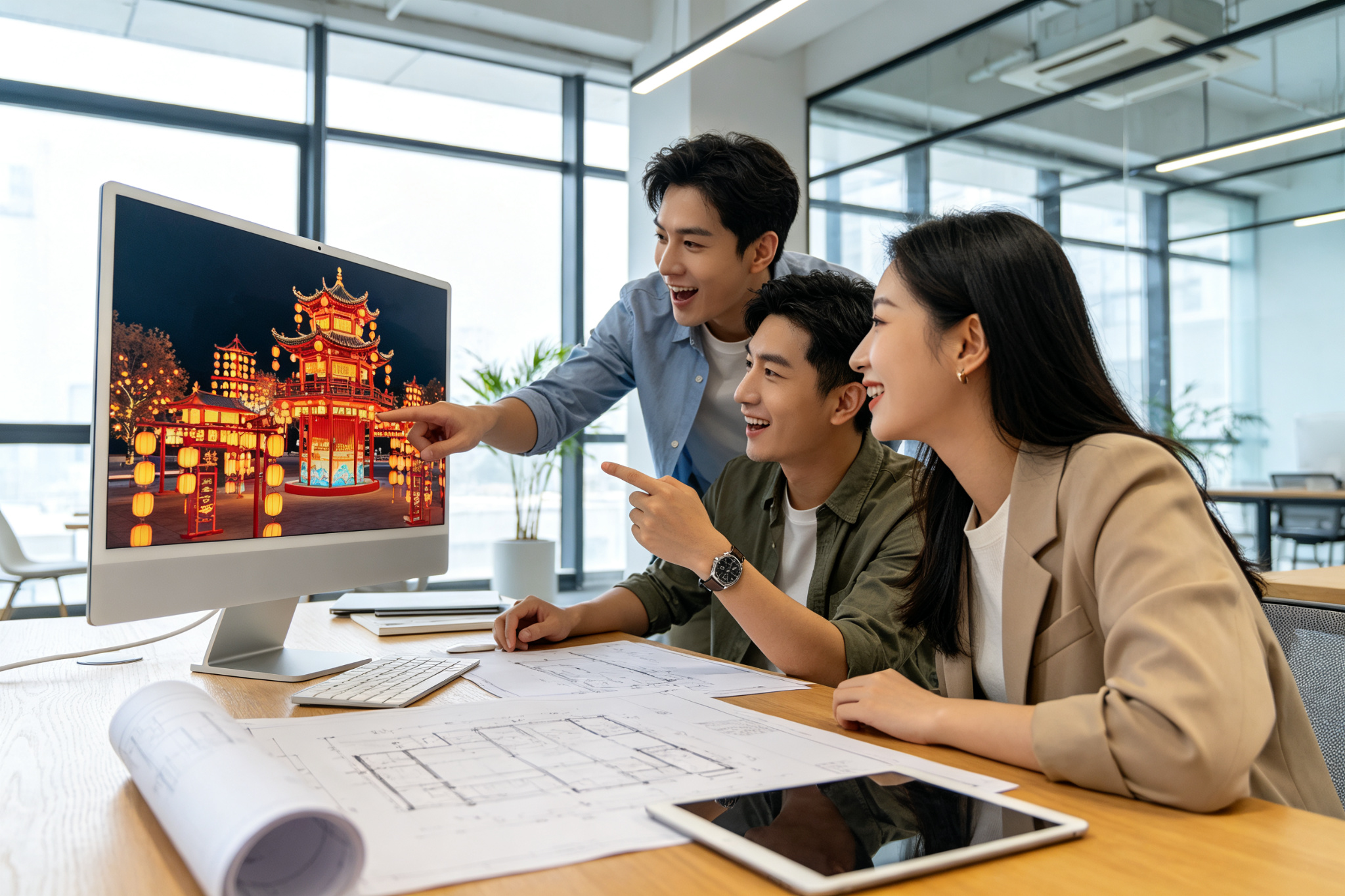
Once a concept direction is approved, the design team produces detailed 3D renderings, site-specific layout plans, and material specifications. This phase typically takes 7-14 days depending on project complexity. The 3D renderings allow clients to preview exactly how each lantern will appear in their venue, including lighting effects, scale relationships, and visitor flow patterns. We encourage clients to share these renderings with stakeholders, marketing teams, and local authorities for feedback and permits before production begins.

The fabrication process combines traditional handcrafting with modern quality control. Each lantern begins as a galvanized steel framework, bent and welded by skilled metalworkers to precise engineering drawings. The framework is then covered with waterproof silk or PVC fabric, stretched and glued by hand to ensure smooth surfaces. Master painters apply intricate details using traditional brush techniques, while electricians install programmable DMX512 LED systems that enable dynamic color changes and synchronized lighting sequences. Every piece undergoes a 48-hour illuminated burn-in test before being approved for packing and shipping.

Expert Q&A

Q: What is the minimum order quantity for custom lanterns?

A: We have no strict minimum order quantity — we accept custom orders for single pieces as well as large festivals. However, per-unit costs decrease significantly with larger orders due to shared design and engineering overhead. Many clients start with 5-10 pieces for a first event, then expand for subsequent years.

Q: Can custom lanterns be reused for multiple events?

A: Yes. Our lanterns are designed for multi-event use with proper maintenance. Steel frameworks typically last 5-8 years, while fabric skins have a 2-3 year lifespan and can be replaced at a fraction of the original cost. We offer refurbishment services including new skins, updated LED systems, and structural repairs.

Q: How involved can I be in the design process?

A: We encourage active client involvement throughout design. You'll work directly with our creative director, review sketches and 3D renderings at each stage, and can request unlimited revisions before production begins. Many of our best designs emerged from collaborative brainstorming with clients who understand their audience better than anyone.